Climate change & resilience
Vulnerability to climate change
Extreme floods and prolonged dry spells have always been part of Europe’s climate history, but what is fundamentally different today is the intensifying impact of human‑driven global warming layered on top of these natural climate dynamics. Inland waterway transport is particularly exposed: navigation depends directly on precipitation patterns, and both extreme events and progressive hydrological shifts are becoming more frequent and more severe. Seasonal changes in water discharge, prolonged low‑water periods, salinisation, and storms all erode the stability on which the sector relies.
At the same time, the logistics system has evolved in ways that heighten vulnerability. Larger vessels, just‑in‑time supply chains, and minimal buffer capacity have reduced tolerance for climate‑related disruptions. Variability that was once manageable now translates into more significant operational and economic disruptions.
The combined effect is clear: climate change is transforming inland waterway transport from a mode that could absorb fluctuations into one that requires proactive resilience and redundancy planning, infrastructure adaptation, and smarter operational strategies to remain reliable. These measures will also benefit other sectors that depend on inland waterways.
Multi-functional role of waterway authorities
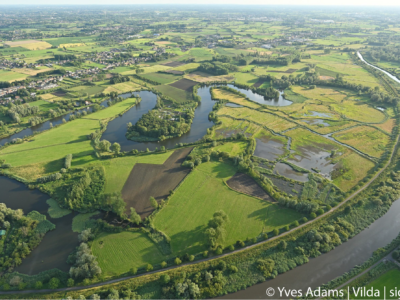
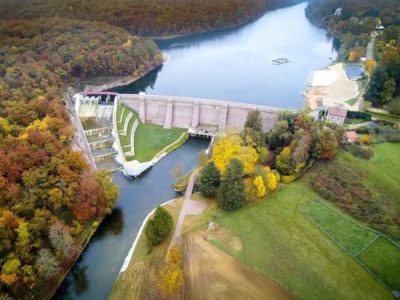
Waterway authorities manage and operate navigable rivers, canals and lakes which cross cities and landscapes that host communities, economic activities, and nature. In addition to providing infrastructure services for commercial and recreational navigation on different types of waterways, waterway authorities provide other important societal and economic services. Waterways and their ancillary infrastructure store a significant percentage of Europe’s surface water.
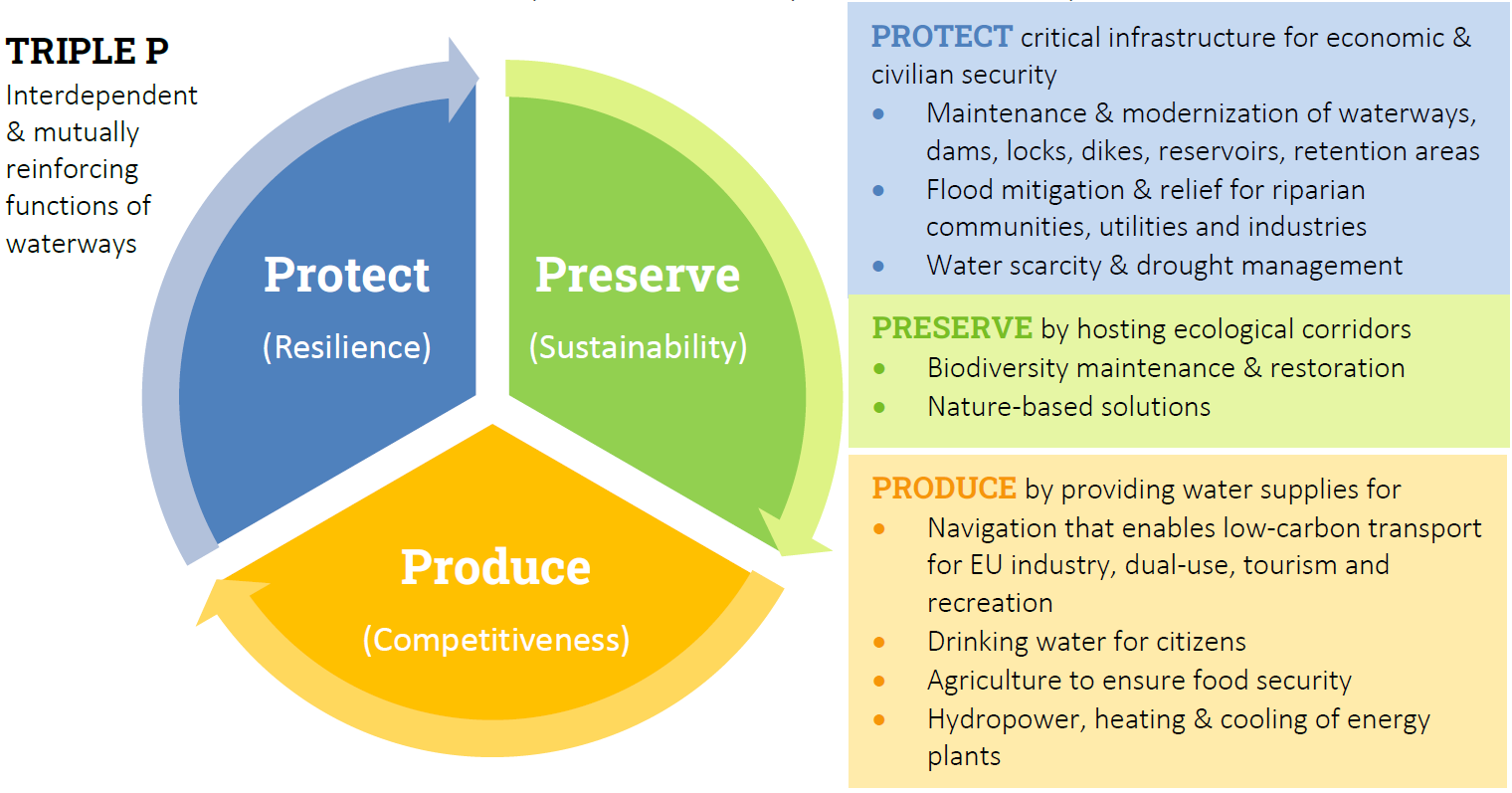
This multi-functional set of tasks highlights the role of waterway authorities in ensuring water security and climate resilience. This guides waterway authorities towards integrated and multidisciplinary planning, design and management of projects, acknowledging interdependencies and combining functions wherever possible to maximise synergies and co-benefits.
How does climate change affect the waterway network and overall water resilience?
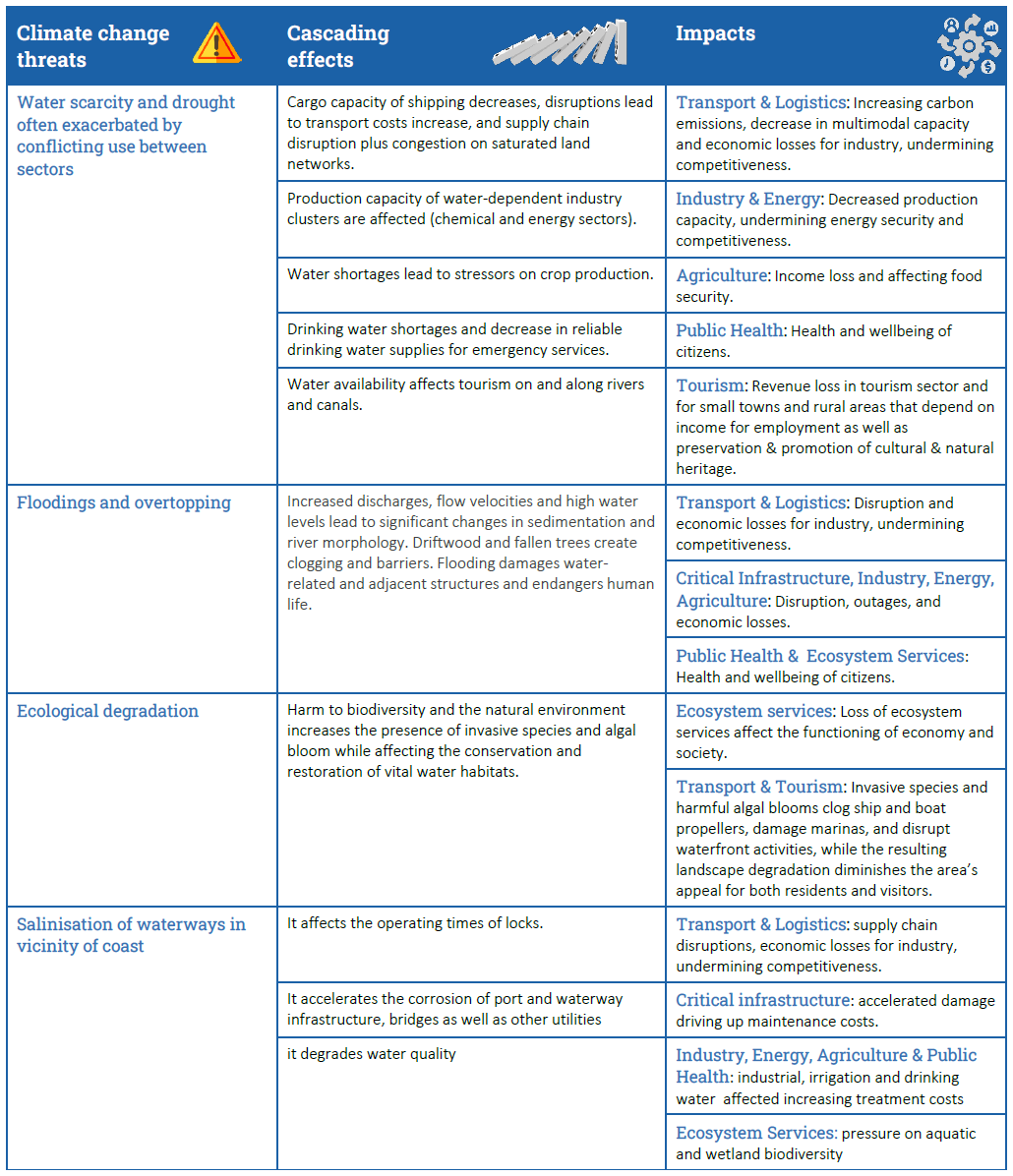
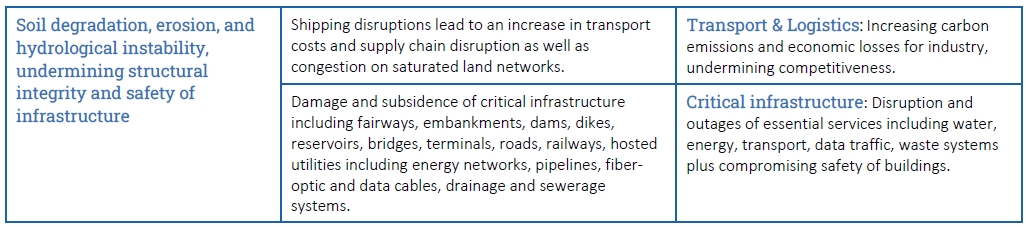
The strategic and multi-purpose role of inland waterways is increasingly evident in the interdependencies between functions and in the context of climate change, which threatens the availability, safety, and resilience of this critical infrastructure. The EEA Climate Risk Assessment identifies 16 of 36 key EU climate risks as water-related and these risks do not exist in isolation: they spread through supply chains, public services, and communities. Inland waterways operate within a system of systems, where disruption in one system cascades across many others.
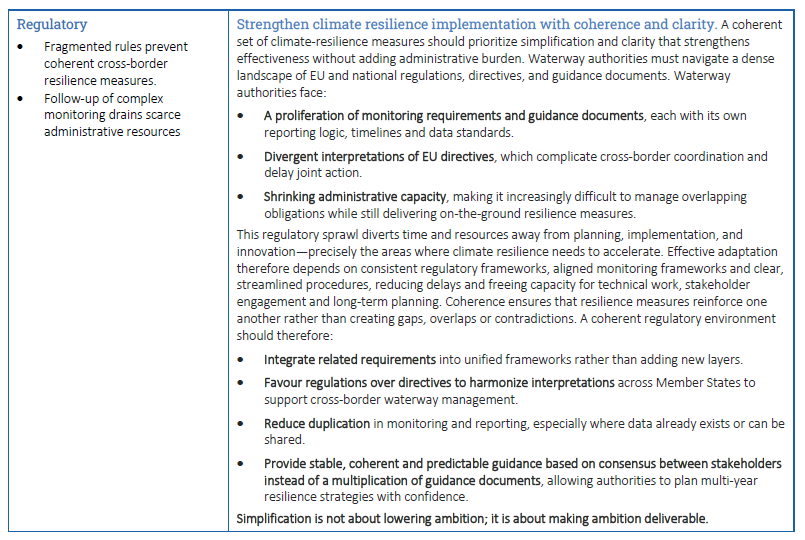
How can we respond more effectively to climate change and increase water resilience?
Water is a strategic asset. Every euro invested in climate-resilient inland waterway infrastructure should be compared to the costs of inaction, as it avoids multiple euros in damage and cascading economic losses. Infrastructure failure leads not only to transport disruption but also to drinking water shortages, ecosystem degradation, and risks to energy and food supplies. Well-maintained and properly invested waterways act as important buffers during extreme events, absorbing excess water during floods and releasing it during dry periods. These functions reduce pressure on infrastructure, lower long-term costs, and safeguard water availability for its many uses. Many industries and their supply chains depend on water reliability, and regions with adaptable water systems will be better positioned to sustain economic activity. Proactive investment therefore prevents far greater damages and cascading economic losses, while also delivering co-benefits for our society, economy and environment, increasing the return on public investment. When investing, we therefore have to prioritise such triple dividends to maximise public return on investment and increase our overall welfare and wellbeing.
Waterway authorities are Working with Nature, develop nature-based solutions or green infrastructure where possible and grey infrastructure when necessary.
Inland Navigation Europe is also a supporter of the Navigating a Changing Climate Partnership, and as such is committed to:
- Reducing greenhouse gas emissions and moving to low carbon navigation infrastructure;
- Strengthening resilience and adapting to the effects of the changing climate;
- Promoting integrated solutions and sustainable solutions;
- Disseminating information about climate change issues relevant to navigation infrastructure.
However, the cross-border nature of many European waterways imply that building effective resilience cannot be addressed by individual Member States alone.