Multimodal Transport
The case for more inland waterway transport
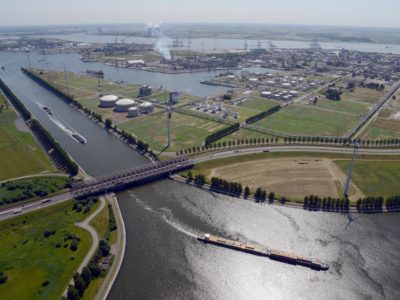
Much of the basic raw materials and semi-finished products that are essential to Europe’s manufacturing base and energy transition goals are transported by inland waterways. Some of the EU’s largest ports have a strong reliance on inland waterways for their hinterland connectivity, with IWT shares in modal split exceeding 50%. Moreover, IWT’s heavy-duty capacity also provides essential support to the offshore industry and wind parks at sea, ensuring the reliable delivery of materials and services. This underlines the importance of IWT not only as a sustainable alternative, but as a cornerstone of waterborne logistics.
To increase the share of inland waterway transport and to drive decarbonisation and promote sustainable supply chains, we need policies that help multimodality to become the default option. Further integration of waterway transport with other modes should be pursued not only for international and inter-regional flows, but also in urban areas where most negative externalities are generated. Construction materials are the largest freight flow in cities, and construction and demolition represent one third of EU waste generation.
The Inland Navigation Market Observatory has carried out an assessment of new market opportunities for inland navigation, shedding light on new types of logistics, vessels and new areas of operation that will be required to capture new markets. Promising markets include urban passenger and freight transport, new flows of goods generated by the circular economy, and the transport of renewable energy and its components for its generation.
A new EU Port Strategy
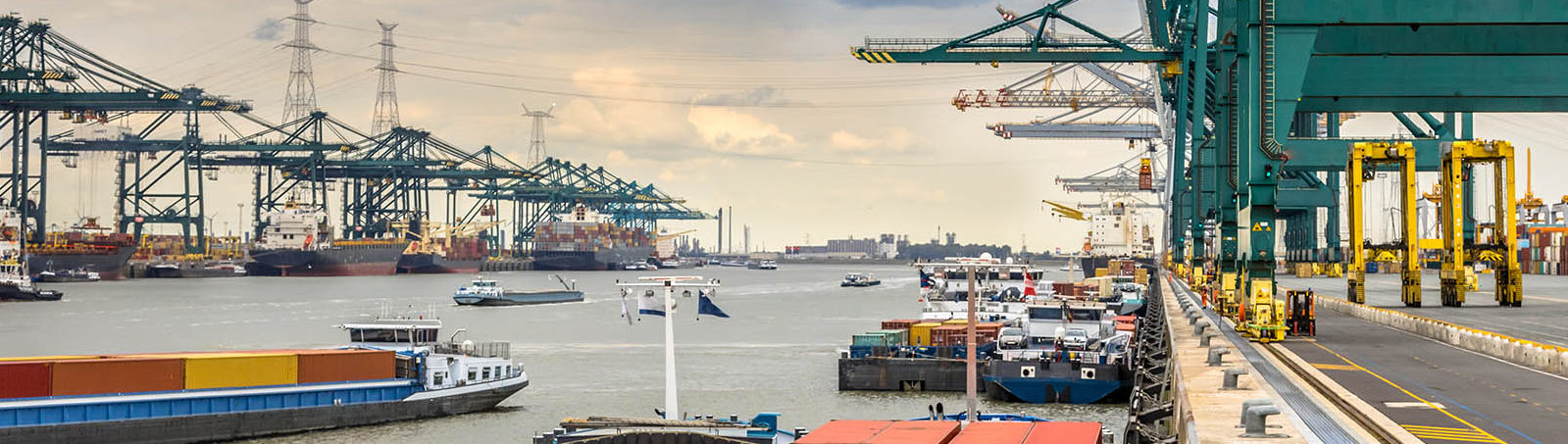
The EU Port Strategy positions sea and inland ports as core multimodal hubs in Europe’s supply chains, linking maritime routes seamlessly with rail, road and inland waterways. The Commission rightly emphasises that hinterland connectivity must become a higher priority, with particular attention to the availability, capacity and reliability of rail and inland waterway links.
Resilience planning for both maritime and hinterland transport must include credible contingency options in case major ports or key corridors are disrupted. Inland waterways play a central role in this effort: achieving Good Navigation Status by 2030 is essential to ensure that waterways can absorb rerouted flows, maintain continuity of service and support coordinated action among infrastructure managers.
A more resilient port system depends on a robust, predictable, modern and well‑maintained inland waterway network, capable of supporting both normal operations and crisis scenarios.
Revision of the combined transport directive
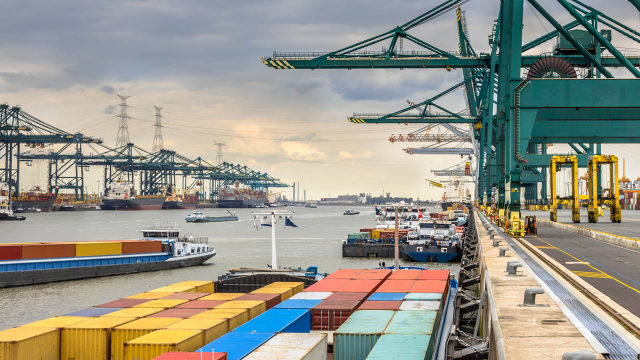
In order to support the modal shift from road freight transport to lower emission modes such as inland waterways, maritime transport and rail, the Commission published a revision of the Combined Transport Directive at the end of 2023. The scope is limited to intermodal transport from A to B in the same loading unit. In order to implement the “polluter pays” and “user pays” principles, the Commission proposes that Member States establish national policy frameworks for intermodal operations that save 40% of external costs compared to the road-only alternative. Users of intermodal operations must use eFTI platforms to be eligible for support. Member States will be able to choose measures appropriate to their situation, but the aim is to achieve a 10% reduction in the cost of combined transport within 7.5 years. The Commission proposal is currently with the co-legislators, the European Parliament and the Council of Ministers.
Revision of EU State for the coordination of transport
The Commission is preparing to adopt a new Transport Block Exemption Regulation (TBER) and a revised version of the 2008 State aid guidelines for rail. The updated framework—renamed the Land and Multimodal Transport Guidelines (LMTG)—broadens its scope to cover multimodal transport, giving Member States more room to support modal shift and integrated transport solutions. Under this framework, the TBER will exempt certain categories of aid for rail, inland waterways and multimodal services from prior notification, while the LMTG will define the conditions under which other forms of State aid for sustainable land transport can be considered compatible with the internal market.
This broader scope is a welcome step, but it is not sufficient. If the EU is serious about shifting freight to sustainable modes, the Commission must raise the aid ceilings and link them to competitive tendering procedures. Keeping ceilings too low or maintaining overly restrictive conditions will force Member States back into lengthy notification procedures for even modest support schemes. That would slow down investment, weaken innovation, and directly undermine the EU’s own modal shift objectives.
A credible State aid framework must empower Member States to act at the scale required. Higher ceilings—combined with transparent tendering—would accelerate deployment, stimulate competition, and give operators the confidence to invest in cleaner, more efficient multimodal solutions. Without this adjustment, the EU risks adopting a framework that recognises the right goals but fails to provide the tools needed to achieve them.
General Block Exemption
The Commission is also reviewing the 2014 General Block Exemption Regulation (GBER). Thresholds may be adjusted and additional guidance is expected, including clearer examples and interpretative clarifications. For inland waterways, The updated GBER should explicitly allow investment aid for climate proof inland vessels and provide clarity on superstructure. In addition, with regard to alternative fuels and refueling infrastructure, it should not name alternative fuels and leave as such room for innovation in this sector.
Rules on alternative fuels and refuelling infrastructure should avoid naming specific technologies. Prescriptive lists risk locking the sector into today’s solutions and discouraging innovation. A technology‑neutral, goal‑oriented approach—based on clear limits for carbon intensity and, where relevant, pollutant emissions—would give operators and investors the flexibility to adopt the most effective solutions as they emerge.
Further simplification and flexibility in State aid design are essential. Complex procedures and restrictive conditions deter national authorities from launching support schemes, slowing down the transition of sectors. Allowing exemptions when aid is awarded through transparent and competitive bidding would reduce administrative burdens while safeguarding fair competition.
Priorities for INE
- INE urges the Commission to fully acknowledge the strategic importance of waterways for Europe’s ports and wider resilience. Their role harnesses multimodal dual-use capacity in port hinterlands and simultaneously extends far beyond transport: waterways secure industrial and energy water supplies, provide critical flood‑management capacity, and form a first line of defence for Europe’s strategic water resilience. INE proposes coordinated EU-level preparedness action for a secure, strategic and sustainable port ecosystem.
- Further simplification and flexibility in State aid design are indispensable. Complex procedures and restrictive conditions actively discourage national authorities from launching support schemes, slowing down the transformation of inland waterway transport at the very moment when acceleration is needed. Allowing exemptions whenever aid is granted through transparent and competitive bidding would cut unnecessary administrative burdens while fully preserving fair competition. This shift would empower Member States to act at the scale required and prevent bureaucratic hurdles from undermining Europe’s modal shift and decarbonisation goals.