Canal du Midi: southern France at a slower pace
04 November 2026
Stretching from Toulouse to the Mediterranean, the Canal du Midi invites visitors to discover southern France from a unique perspective. Along its banks, centuries-old engineering works, vibrant towns and tranquil countryside come together to create one of Europe’s most memorable waterway journeys. Passing through vineyards, villages and historic towns, the waterway provides a variety of opportunities to enjoy the region.
Canal du Midi reveals opportunities for travelers to explore southern France at a slower pace. Whether by foot, bike, boat, or a combination of the three, the canal can be discovered through one of its many sections, or by following the route in its entirety.
Built in the 17th century, the Canal du Midi was an ambitious engineering project designed to connect the Atlantic and Mediterranean. Before its construction, transporting goods between the two seas by water meant travelling around the Iberian Peninsula. At the time this was a long, expensive, and dangerous route due to the presence of corsairs and pirates. The canal offered an alternative inland route, improving trade and travel conditions between the regions.
Construction began in 1667 under the direction of Pierre-Paul Riquet and the canal opened in 1681. Building it presented several challenges, including differences in elevation and the need for a reliable water supply. A remarkable 12,000 labourers contributed to its completion. The finished waterway included an extensive system of locks, bridges and aqueducts, many of which can still be seen today.
More than 350 years later, the canal remains a popular destination for visitors looking to explore the region. Its historic infrastructure, surrounding landscapes, and location near some of southern France’s best-known towns make it an interesting route to discover southern France at a slower pace.
A UNESCO World Heritage Site
In 1996, the Canal du Midi was designated a UNESCO World Heritage Site. It is the first monument of its kind to be given this title.
The canal is closely connected to the landscape around it, passing through agricultural land, vineyards and historic settlements. For visitors, the canal’s history is something that is naturally experienced while traveling in or alongside.
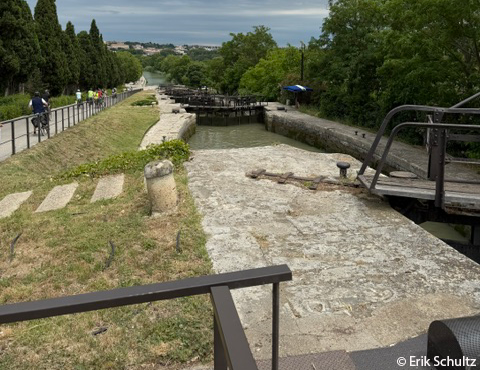
Few sights along the Canal du Midi capture its engineering ambition and navigability better than the Fonseranes Locks, where boats still climb and descend the landscape centuries after their original construction.
The historical waterway infrastructure that remains offers a closer look into how engineers of centuries past overcame the challenges of building a navigable waterway across the region.
Discovering the canal by boat
One of the best ways to experience the Canal du Midi is undoubtedly from the water itself. Visitors can hire boats for several days or join shorter guided cruises, passing through locks and under historic bridges en route.
Travelling by boat also makes it possible to stop along the canal rather than simply passing through the region. Visitors can explore local markets, try regional food and wine, or spend time in the towns and villages along the route.
Carcassonne is a popular stop, particularly for visitors interested in its medieval city. Further east, Béziers hosts the infamous Fonseranes Lock staircase (Les 9 Écluses de Fonseranes), demonstrating how the canal managed to navigate the change in elevation.
For visitors with less time, guided cruises offer a way to experience various sections of the canal without committing to a longer boating trip.
Exploring by bike or on foot
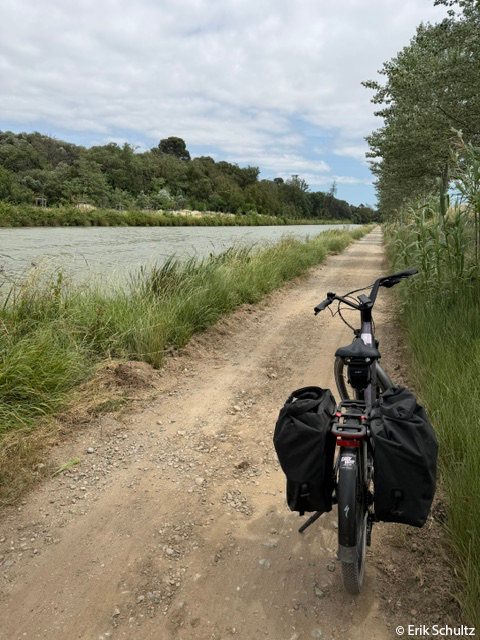
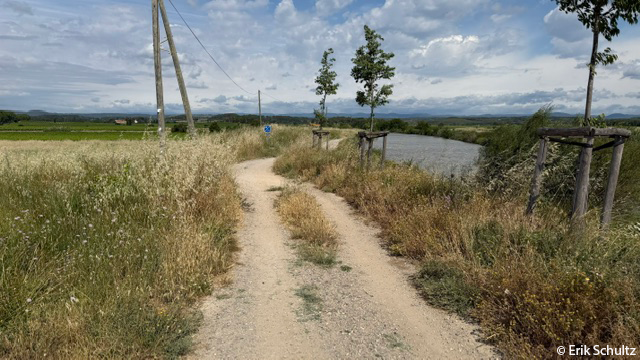
With paths alongside the waterway, Canal du Midi also offers great opportunities for cycling and walking. Cycling allows visitors to cover more ground and combine the canal with nearby destinations. The sections around Carcassonne and Béziers are popular starting points, while the route from Toulouse to the Mediterranean remains a longer route option for cycling enthusiasts or those with a bit more time.
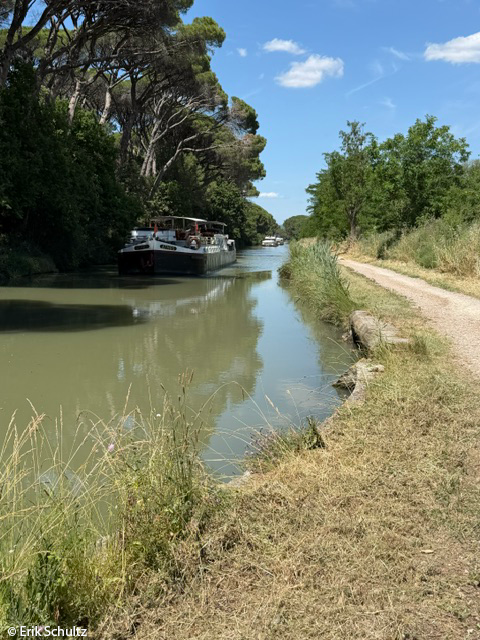
INE member Erik Schultz had the opportunity to experience Canal du Midi firsthand in summer 2026:
“With my background on waterways we were very surprised to find this Canal du Midi, with its history and age, in such mint condition. The bike path is well-kept and there are always signs for the next destinations. There is very active navigation of recreational vessels, and most are rentals [but there is] the odd commercial vessel as well. The locks were also a joy to see: working swiftly and well in use. There are very nice places to eat and stay along the waterway, including in former lock-keepers houses. We can recommend it. For bikers it is a must and a pleasure. We took two weeks to go from Toulouse to Sète on the Mediterranean coast.”
For those that prefer slow travel in its simplest form, exploring the canal by foot is also an option. The area around Fonseranes is an ideal place to watch boats pass through the locks, while paths near Carcassonne make it easy to combine a walk with a visit to the city.
Whether cycling for a few hours or taking a short walk along the banks, visitors can also explore individual sections of the waterway while passing through the region.
Ségolène Ricart-Vanpouille, National Tourism Manager at Voies navigables de France admits it is difficult to choose a favorite spot or section on the canal amidst so many great options:
“It’s hard to single out one spot over another, as there are so many iconic sites to discover along this canal. I really like Le Somail because of the variety of things to see there and the opportunity to enjoy a meal. In fact, this site is currently undergoing an ambitious redevelopment project to restore it to its former glory, a project carried out in partnership with Narbonne.”
Canal du Midi offers more than a route between two destinations. Present day redevelopment of certain sites will allow travelers to enjoy the canal even more in years to come. Its historical infrastructure remains part of the experience of travelling along it, while the towns, villages and natural landscapes provide an abundance of opportunities to stop and explore. When experienced from the water, tourism in southern France unfolds at a different pace. Dotted with charming vineyards, inviting towns, delicious local eateries, and impressive engineering works, the canal seamlessly links places of interest on a waterway that continues to captivate its visitors.
The canal is also a reminder of the long-standing role waterways play in connecting diverse people, places and experiences, offering a perspective that is often missed by faster forms of travel and tourism.